
Helpful strategies for managing strawberry legs
Strawberry legs, characterised by tiny dark dots resembling strawberry seeds, can often be caused by clogged pores, a skin condition called Keratosis Pilaris (KP), or inflamed hair follicles (folliculitis). For sensitive and eczema-prone skin, using gentle approaches is key. E45 offers solutions that focus on mild exfoliation, thorough moisturisation with emollients, and proper shaving techniques. Regular and consistent use of E45 products can help support your skin’s natural barrier, soothe irritation, and help prevent these dots from coming back, leading to smoother, clearer-looking legs.
Table of Contents
- What are strawberry legs?
- What causes strawberry legs?
- KP vs. folliculitis: A clear comparison
- Dermatologist-approved strategies for treating strawberry legs
- Long-term prevention regimens for sustained smooth skin
- Choosing the right E45 treatment for your strawberry legs
- Conclusion
- FAQ: Strawberry legs
What are strawberry legs?
Strawberry legs is a common term for a harmless skin appearance characterised by tiny, dark spots that can look a bit like the seeds on a strawberry. These spots are usually seen on the legs and often happen when pores get clogged or hair follicles become inflamed, sometimes made worse by shaving or dry skin. While not medically serious, they can be a bit of a nuisance for many. Understanding what might be causing them is the first step towards finding helpful ways to care for your skin, especially if you have sensitive or eczema-prone skin, where gentle solutions like those from E45 can be very beneficial.
What causes strawberry legs?
Strawberry legs isn’t just one condition, but rather a descriptive term for several underlying skin concerns. Knowing what’s causing the dots on your skin can really help you choose the best way to look after it.
Keratosis Pilaris (KP)
Sometimes mistaken for little spots, Keratosis Pilaris is a common skin condition where dead skin cells build up around the hair follicles. This can create small, rough bumps and sometimes dark spots. It often appears on the thighs and upper arms and is quite common. It is often inherited and may get worse in the winter (Source).
Folliculitis
This condition involves inflammation or infection of the hair follicles, which can be caused by bacteria, yeast, or fungi. It might look like small, red bumps or pus-filled spots, which can darken and give that “strawberry” appearance, particularly after shaving.
Clogged pores & dead skin cells
When the pores on your legs get blocked with everyday dirt, oils, and dead skin cells, the trapped contents can turn dark when exposed to the air. This is a bit like how a blackhead forms and can really add to the dotted appearance.
Shaving irritation & ingrown hairs
If you’re not careful with your shaving routine – perhaps using a dull razor or shaving against the direction your hair grows – you might irritate the hair follicles. This can lead to inflammation and ingrown hairs. When hairs curl back into the skin, they can cause red or dark bumps, making the strawberry dots more noticeable.
Dry skin
Very dry skin can make your pores and hair follicles stand out more, making strawberry legs look worse. It can also weaken your skin’s natural barrier, leaving it more open to irritation and inflammation.
Identifying the specific cause is key, whether it is a condition like Keratosis Pilaris, simple dry skin, or irritation from shaving. Knowing this is helpful for finding the right way to smooth and care for your legs.
KP vs. folliculitis: A clear comparison
It’s helpful to understand the differences between Keratosis Pilaris (KP) and Folliculitis, as they are often confused but can need slightly different approaches to care.
| Feature | Keratosis Pilaris (KP) | Folliculitis |
|---|---|---|
| Appearance | Small, rough, flesh-coloured, red, or dark bumps; often feel like “goosebumps.” Bumps are typically dry. | Small, red bumps or pustules (pus-filled spots) around hair follicles. They might be itchy or a bit sore. |
| Texture | Rough, like sandpaper. | Often smooth but inflamed; you might see a hair in the middle of the bump. |
| Location | Commonly on upper arms, thighs, buttocks, sometimes face. | Anywhere hair grows; often on legs, bikini line, scalp, beard area. |
| Cause | A genetic condition; too much keratin clogs hair follicles. | Infection (bacterial, fungal, or yeast) or irritation from shaving or friction. |
| Associated Symptoms | Dry skin, often linked with eczema, can be worse in winter. | Itching, tenderness, burning, sometimes a bit of pus. |
| Primary Approach to Care | Gentle exfoliation, intensive moisturisation, helping the skin barrier. | Looking after the infection source, anti-inflammatory care, using antiseptic washes. |
Dermatologist-approved strategies for treating strawberry legs
Looking after strawberry legs, especially if you have sensitive skin, often involves a few different helpful steps. E45’s range offers gentle yet effective solutions that dermatologists often suggest.
Step 1: Gentle exfoliation for sensitive skin
Regularly helping to remove dead skin cells can prevent clogged pores, but harsh scrubs can upset sensitive skin. The goal is to gently loosen the dead cells.
- Chemical exfoliants: It can be helpful to look for mild acids (like lactic or salicylic) which gently dissolve plugs without friction. Start slowly (once or twice a week).
- Physical exfoliants: If you prefer scrubbing, use a soft washcloth or a very fine-grained scrub. Always avoid rough brushes or harsh salt scrubs.
Using mild chemical or gentle physical exfoliation a few times a week helps to prevent dead skin cells from clogging your pores.
Step 2: Intensive moisturisation & barrier support with emollients
Keeping your skin well-hydrated is key to improving its texture and preventing dryness. Emollients such as soft paraffin are utilised in E45 products to form a protective layer that locks in moisture and prevents water loss.
This crucial hydration works to:
- Soften skin: Helps reduce the prominence of KP bumps.
- Reduce redness: Helps lessen inflammation associated with KP.
- Support repair: Aids overall skin repair and barrier function.
In short, the protective layer created by emollients like E45 is essential for keeping the skin supple, reducing inflammation, and building a stronger skin barrier to manage dry conditions like KP.
Step 3: Optimising your shaving routine
Adjusting how you shave can make a real difference in preventing strawberry legs.
- Always use a sharp razor (change every 5-7 shaves). Dull blades cause irritation.
- Prepare your skin by shaving towards the end of your shower using a gentle, hydrating cream or gel.
- Shave with the grain to reduce irritation.
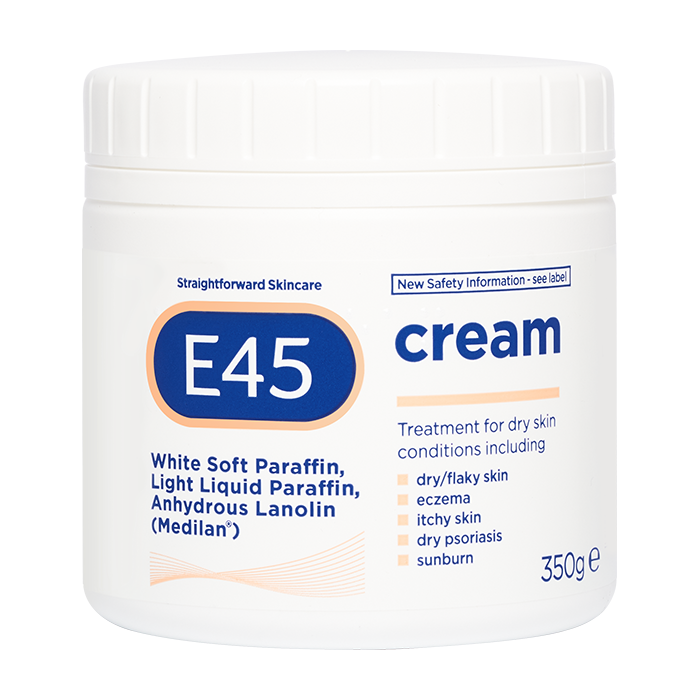
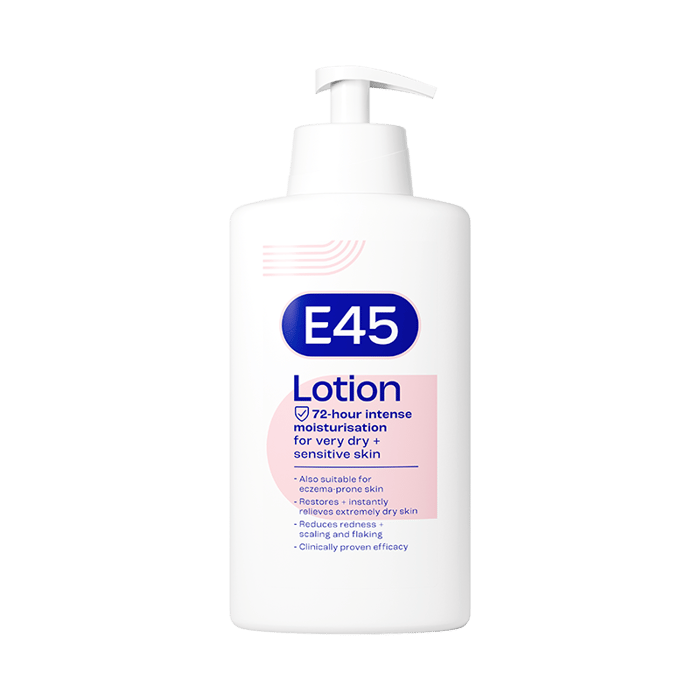
- Rinse with cool water and immediately apply E45 Cream or Lotion to soothe and hydrate the skin.
By using a sharp blade and preparing your skin with warm water and cream, you minimise irritation and reduce the risk of ingrown hairs that cause the dark, dotted appearance.
Step 4: Addressing folliculitis
If folliculitis is a main concern, specific care might be necessary.
- Consult a professional: If bumps are persistent, itchy, or show signs of infection, it’s important to chat with your GP or practice nurse to discuss treatment options.
- Avoid friction: Choosing loose-fitting, breathable fabrics can be helpful to reduce irritation against the follicles.
If symptoms are severe or persistent, it is important to seek professional medical advice to manage potential infection or inflammation. In the meantime, reducing friction with loose clothing can help prevent flare-ups.
Long-term prevention regimens for sustained smooth skin
Being consistent is key to managing strawberry legs and helping to stop them from coming back. Getting into a regular, gentle skincare routine that suits sensitive skin is very important.
Your daily E45 skincare checklist
- Cleanse gently: Use a mild, hydrating body wash that cleanses without stripping your skin’s natural oils. It’s best to avoid harsh soaps.
- Exfoliate (2-3 times/week): Incorporate a gentle chemical exfoliant or use a soft washcloth a few times a week to help prevent dead skin cells from building up.
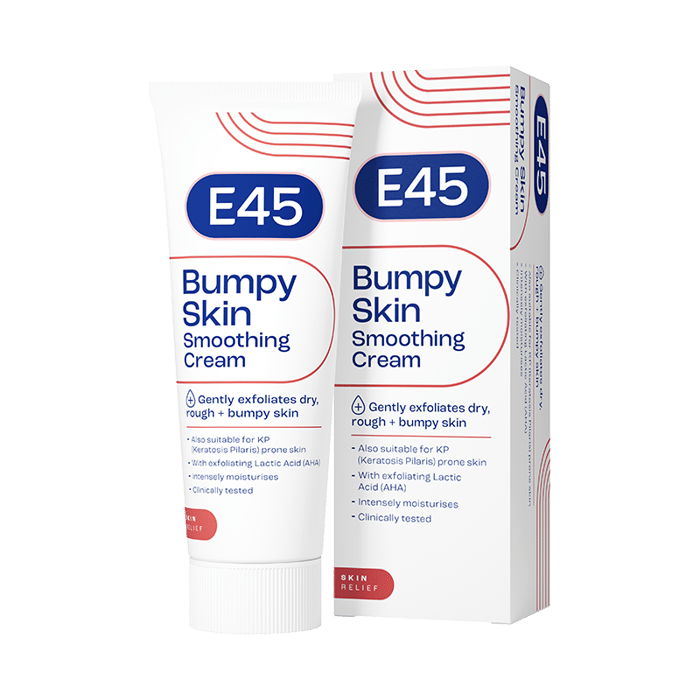
- Moisturise daily: Apply E45 Cream or Lotion twice a day to keep your skin hydrated and strengthen its natural barrier. [1] For a 2-in-1 cream that exfoliates and moisturises, apply E45 Bumpy Skin Smoothing Cream.
- Optimise shaving: Follow the recommended shaving routine carefully, even if you don’t shave every day.
- Hydrate from within: Drinking plenty of water is good for your overall skin health.
- Avoid irritants: Try to steer clear of strong fragrances, dyes, or ingredients in other products that could irritate your sensitive skin.
- Regular healthcare professional check-ups: If your symptoms continue or get worse, it’s a good idea to chat with a healthcare professional.
Choosing the right E45 treatment for your strawberry legs
E45 offers a range of products specially made for dry and sensitive skin. Here’s a guide to help you pick the best approach based on what your main symptoms are:
| Primary Symptom/Cause | Key Characteristics | Recommended E45 Product/Approach |
|---|---|---|
| Dryness & Roughness (KP) | Small, bumpy texture; very dry patches. | E45 Cream / E45 Lotion or E45 Bumpy Skin Smoothing Cream: Apply E45 Cream or E45 Lotion generously every day to help restore your moisture barrier and combine with gentle chemical exfoliation. Or for a cream that exfoliates and moisturises, use E45 Bumpy Skin Smoothing Cream. |
| Post-Shave Irritation | Red bumps appearing after shaving; ingrown hairs. | E45 Cream / E45 Lotion: Apply straight after shaving to soothe and hydrate. Focus on improving your shaving technique. |
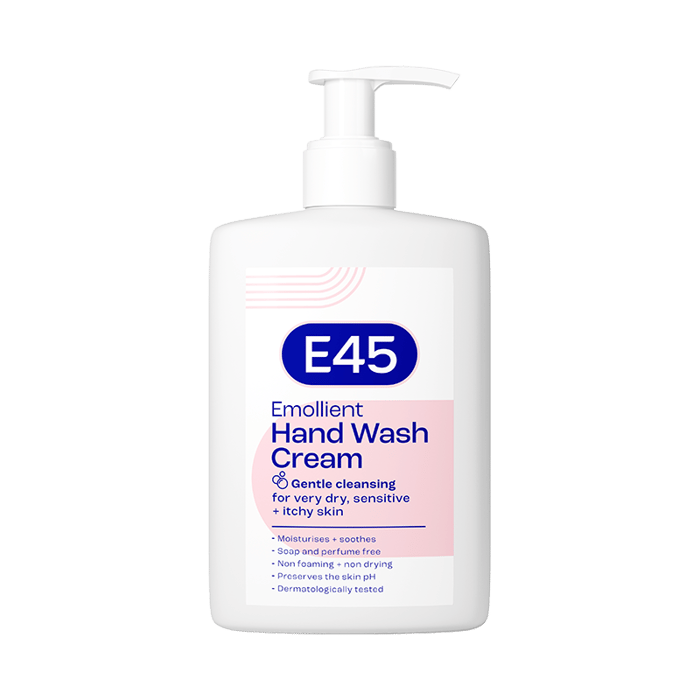
| General Clogged Pores | Dark dots without much inflammation or roughness. | E45 Emollient Wash Cream / E45 Cream: Use a mild cleanser to help keep pores clear, followed by daily moisturisation. Regular gentle exfoliation is key. |
| Eczema-Prone Skin | Redness, itching, extreme dryness, sensitivity. | E45 Cream / E45 Emollient Wash Cream: Offers intensive hydration and barrier support for very sensitive skin. If you have severe flare-ups, it’s always best to speak to a doctor. |
Conclusion
Strawberry legs, though they can be frustrating, are a common skin concern that can be looked after effectively. By understanding what might be causing them and adopting a consistent, gentle skincare routine, you can work towards smoother, clearer-looking legs. E45’s range, which is often recommended by dermatologists, offers effective, sensitive-skin-friendly solutions. These products focus on strengthening your skin’s barrier, giving it deep hydration, and soothing irritation. With E45, you can feel more confident about managing your strawberry legs and enjoying comfortable, healthy skin.
FAQs about strawberry legs
Can strawberry legs be permanently cured?
While there isn’t a permanent “cure” that removes the tendency for them to appear, strawberry legs can be managed very well and significantly improved with a consistent and appropriate skincare routine. Regular use of helpful products like E45 can really help to keep symptoms under control.
How long does it take to see results from treatment?
You’ll typically start to notice improvements within a few weeks to a couple of months if you’re consistent with your care routine. Conditions like KP and more severe folliculitis might take a bit longer. Being patient and sticking to your regimen really helps.
Which deficiency causes strawberry skin?
While Keratosis Pilaris (KP) is the most common cause of strawberry skin, it’s not typically caused by a specific vitamin deficiency. It’s a genetic condition where the skin overproduces keratin, leading to clogged follicles.
How to get rid of strawberry legs?
Getting rid of strawberry legs involves a consistent routine focused on gentle care. The most helpful approach is to regularly exfoliate gently to prevent pore blockages, and most importantly, moisturise intensively every day with an emollient like E45 to strengthen the skin barrier and reduce dryness. If the cause is shaving, optimising your shaving technique is key to preventing irritation.
How to get rid of strawberry legs after epilating?
To help reduce the appearance of strawberry legs after epilating, focus on soothing irritation and preventing ingrown hairs. It’s important to keep the skin clean, and then immediately follow up with intensive moisture, applying an emollient like E45 Cream to calm the skin and support its barrier. Gentle exfoliation a couple of days later can help keep the hair follicles clear as the new hairs start to grow back.
When should I see a healthcare professional for strawberry legs?
If your strawberry legs don’t seem to go away, are itchy or painful, show signs of infection (like pus or if you have a fever), or don’t get better with over-the-counter treatments, it’s a good idea to speak to a healthcare professional. They can accurately work out the underlying cause and discuss stronger treatment options if needed.