Eczema Rash: Symptoms, Causes and Treatment
An eczema rash usually shows up as patches of itchy, dry skin that can be cracked, scaly or crusty, and it looks different depending on your skin tone: red on lighter skin, but often dark brown, grey or purple on darker skin. It isn’t contagious, and it tends to come and go in flare-ups. This guide explains what an eczema rash looks like, what causes it, how to tell it apart from other rashes, and how eczema rash treatment, from daily moisturising to creams for flare-ups, can help keep it under control.
What Does an Eczema Rash Look Like?
An eczema rash usually shows up as patches of itchy, dry skin that can also be cracked, crusty, scaly or thickened, and may blister or bleed during a flare-up. Depending on your skin tone, it can look red, white, purple or grey, or lighter or darker than the skin around it (Source). Inflammation tends to look red on lighter skin, but on darker skin tones it can look dark brown, grey or purple, and can be harder to see. After a flare, the skin can be left with darker or lighter patches, which are more noticeable on darker skin; these should settle once the eczema has improved, although it may take some months (Source).
Common Locations
An eczema rash can appear anywhere on the body, but it’s most common on the elbows, knees and hands, and in babies and toddlers it’s also common on the face (Source). It often affects the areas that bend or crease, such as the insides of the elbows and backs of the knees. On skin of colour, it can also affect the outer elbows and knees, and the skin may look bumpy (Source). For more on symptoms, see our Atopic Dermatitis guide.
What Causes an Eczema Rash?
In skin with eczema, the skin barrier is weakened, so moisture can escape and irritants, allergens and bacteria can get in, causing inflammation and itching (Source). It’s not always known why this happens, but you’re more likely to have eczema if one or both of your parents have it, or if you or a close family member has asthma or hay fever. Things that can make an eczema rash worse include allergens and irritants such as soap, washing detergent, pets, some fabrics, pollen and house-dust mites, as well as heat or changes in temperature, skin infections, stress and hormonal changes. An eczema rash isn’t contagious, so you can’t catch it or spread it (Source).
Types of Eczema That Cause a Rash
There are several types of eczema, and each can cause a rash that looks slightly different:
- Atopic eczema (atopic dermatitis): the most common type, causing dry, itchy patches, often in skin creases. Read more in our Atopic Dermatitis guide.
- Contact dermatitis: a rash triggered when the skin touches an irritant or allergen. See our Dermatitis and Contact Dermatitis guides.
- Discoid eczema: coin-shaped, very itchy patches, usually on the arms, lower legs and trunk. Read more in our Discoid Eczema guide.
For other types, including pompholyx and seborrhoeic eczema, see our main Eczema guide.
Eczema Rash vs Other Rashes
Several other skin conditions can look like an eczema rash. A few useful differences to look out for:
- Psoriasis: usually causes patches of red, flaky, crusty skin covered with silvery scales, most often on the elbows, knees, scalp and lower back (Source), while an eczema rash is usually itchier with softer edges. Read more in our Psoriasis guide.
- Hives (urticaria): a raised, itchy rash that usually gets better within a few minutes to a few days (Source). An eczema rash tends to last much longer.
- Contact dermatitis: technically a type of eczema, but linked to a specific trigger – the rash appears where your skin touches an irritant or allergen, and usually settles once you avoid it.
- Ringworm: a fungal infection that usually causes a ring-shaped rash, with skin that looks healthier in the middle (Source). Unlike eczema, ringworm can spread to other people and needs antifungal treatment (Source).
If you’re not sure what kind of rash you have, a pharmacist or GP can help, since the right treatment can be very different.
How to Treat an Eczema Rash
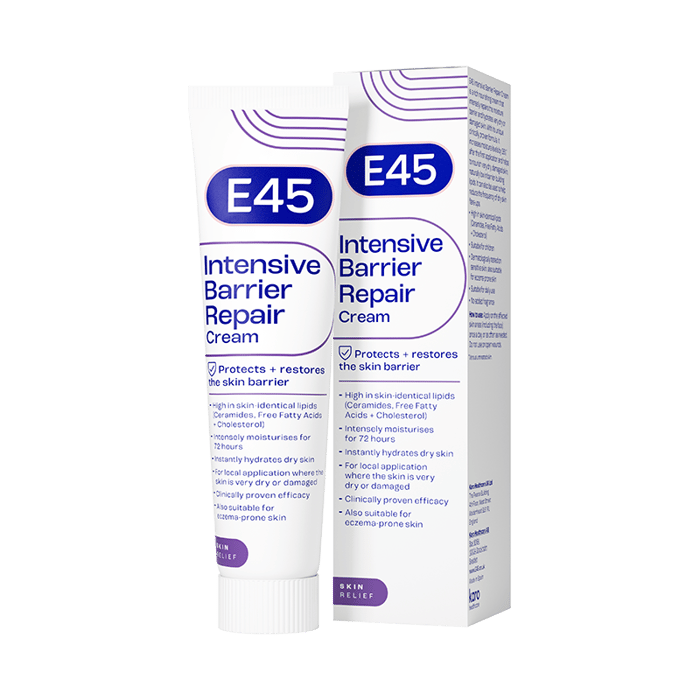
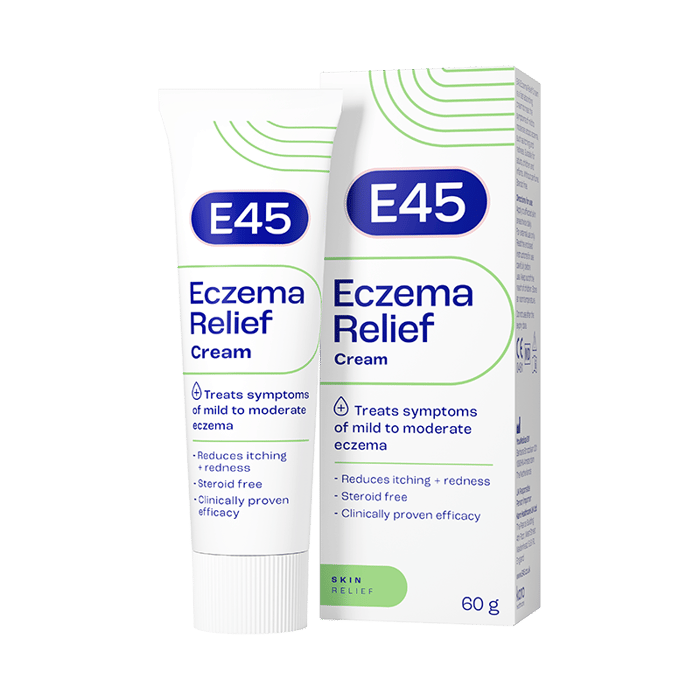
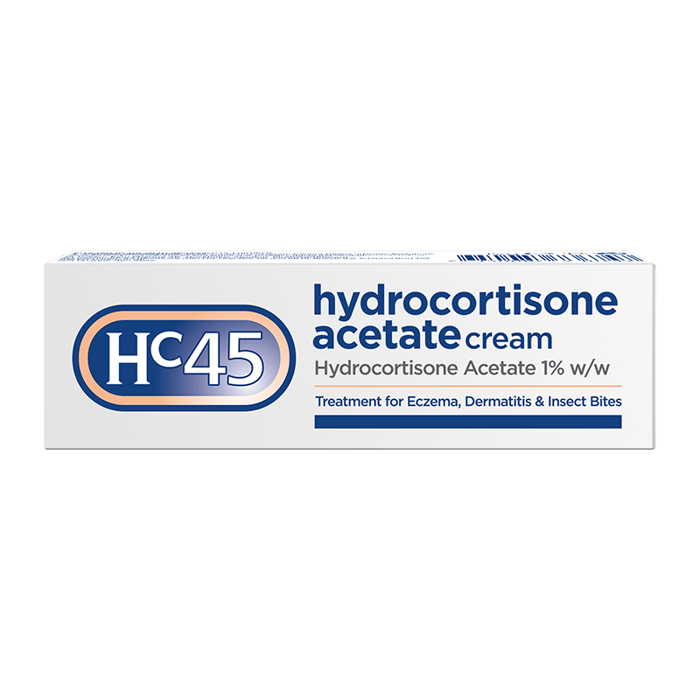
Eczema rash treatment usually combines three things: daily moisturising, treating flare-ups, and avoiding your triggers. Emollients (medical moisturisers) are key to managing all types of eczema, and topical steroids are the first-line treatment for bringing flare-ups under control (Source). The NHS recommends applying emollients at least twice a day, and carrying on even when your eczema improves (Source). For a steroid-free eczema rash cream you can use every day, E45 Eczema Relief Cream is suitable for mild to moderate eczema on the face and body, for adults, children and infants. For flare-ups, HC45 Hydrocortisone Cream is a mild steroid cream for mild to moderate eczema in adults and children aged 10 and over; use it for up to 7 days and not on the face. If a mild steroid hasn’t brought your eczema under control after a week, see your GP, who can prescribe something stronger.
Self-Care Tips
Alongside treatment, a few simple habits can help keep an eczema rash under control:
- Keep baths and showers lukewarm rather than hot, and pat your skin dry (Source).
- Wash with an emollient instead of soap – E45 Emollient Shower Cream can be used as a soap substitute.
- Keep cool, as being hot can make eczema itchier.
- Moisturise at least twice a day, and keep going even when your skin looks clear.
- Try not to scratch – keep nails short, and gently rub the itchy area with your finger instead (Source).
When to See a Doctor
A pharmacist can help with small areas of mild eczema, but see a GP if your eczema rash is more severe or treatments aren’t helping. Ask for an urgent GP appointment or get help from NHS 111 if your eczema rash is blistered, crusty, leaking fluid or has spots filled with pus; is painful, swollen or feels warm; suddenly gets worse or bigger; or if you have a high temperature or feel generally unwell. These can be signs that your eczema is infected, or of a more serious condition called eczema herpeticum. (Source).
Frequently Asked Questions about Eczema Rashes
What does an eczema rash look like on dark skin?
On darker skin, an eczema rash may look dark brown, grey or purple rather than red, and can be harder to see. It can also leave darker or lighter patches once it settles, which should fade as the eczema improves (Source).
Is an eczema rash the same as psoriasis?
No, they’re different conditions. Psoriasis tends to cause well-defined patches with thicker, silvery scales, while an eczema rash is usually itchier with softer edges. A GP can tell you which you have.
Can an eczema rash spread?
An eczema rash can spread to other areas of your own body during a flare-up, and scratching can make it worse. It can’t spread to other people, though.
How do I know if my eczema rash is infected?
Signs of an infected eczema rash include blistering, crusting, leaking fluid or pus-filled spots, pain, swelling or warmth, the rash suddenly getting worse, or a high temperature. Ask for an urgent GP appointment or contact NHS 111 if you notice these (Source).
Is an eczema rash contagious?
No. Eczema isn’t contagious, so you can’t catch it from someone or spread it to others (Source).
What triggers an eczema rash flare-up?
Common triggers include soap, washing detergent, pets, some fabrics, pollen, house-dust mites, heat or changes in temperature, stress and hormonal changes, but they vary from person to person (Source).
How long does an eczema rash last?
There’s no set timeline. Eczema tends to come and go, with times when symptoms get worse (flare-ups) and times when they’re better, and for many people it improves with age (Source). Moisturising regularly and treating flare-ups early can help keep them under control.