Guttate Psoriasis: Symptoms, Causes and Treatment
Guttate psoriasis is a type of psoriasis that causes small, teardrop-shaped, scaly spots to appear suddenly across the body, often shortly after a strep throat infection. It’s most common in children, teenagers and young adults, it isn’t contagious, and it often clears up on its own within a few months. This guide explains what guttate psoriasis looks like, what triggers it, how it’s diagnosed, how long it lasts, and what guttate psoriasis treatment involves.
Table of Contents
What is guttate psoriasis?
Guttate psoriasis is a type of psoriasis that causes small, teardrop-shaped, scaly spots to appear suddenly across the body, often shortly after a strep throat infection. The name comes from the Latin word for ‘drop’ (Source), which is why it’s also known as teardrop or raindrop psoriasis. It can happen at any age, but it’s most common in children, teenagers and young adults (Source). Guttate psoriasis behaves quite differently from plaque psoriasis, the most common type: it comes on quickly, often clears up on its own within weeks or months, and many people never have it again (Source). For more on psoriasis in general, see our main Psoriasis guide.
What are the symptoms of guttate psoriasis?
Guttate psoriasis usually appears as lots of small, round or drop-shaped spots, up to about 1cm across (Source), that come up quickly over a day or two (Source). The spots are slightly raised with a thin scale, and early on there may be very little scale at all (Source). They typically spread across the chest, stomach, back, arms and legs, and sometimes the neck, head and scalp. On lighter skin, guttate psoriasis spots tend to look bright pink or red, while on darker skin they may look darker rather than red. Some people find the rash itchy or sore; others barely notice it (Source). If your scalp is affected, our Scalp Psoriasis guide covers this in more depth.
What causes guttate psoriasis?
Guttate psoriasis is most often triggered by a streptococcal (strep) throat infection, such as tonsillitis – a throat infection is found in around 80% of cases. It’s thought the infection sends the immune system into overdrive, so that it accidentally reacts to your own skin (Source). This leads the skin to make more skin cells than usual, which is what causes the spots to form (Source). The rash typically appears around 7 to 10 days after the infection (Source). Other viral or bacterial infections can occasionally trigger it too, and people who are prone to strep throat may get repeat episodes (Source). Rarely, certain medicines, such as lithium and beta-blockers, can cause it (Source). Wider psoriasis triggers, such as stress and cuts or scratches to the skin, can also play a part, and you’re more likely to develop psoriasis if a member of your family has it (Source).
Is guttate psoriasis contagious?
No, guttate psoriasis itself is not contagious. Like all types of psoriasis, it’s linked to the immune system rather than an infection, so it can’t be passed from person to person through touch, close contact or sharing towels, for example (Source). However, the strep throat infection that often triggers it can be passed on to others, through close contact, coughs and sneezes (Source). So while no one can catch guttate psoriasis from you, if you still have an active throat infection, it’s worth washing your hands regularly and covering coughs and sneezes.
How is guttate psoriasis diagnosed?
Guttate psoriasis is usually diagnosed by a GP, based on how the spots look and whether you’ve recently had a sore throat or other infection. There’s no specific test for it, but if there’s no obvious recent illness, your GP may check for signs of a recent strep infection, for example with a blood test (Source) or a throat swab. A skin biopsy isn’t usually needed. If the diagnosis isn’t clear, you may be referred to a dermatologist, since a few other conditions, such as pityriasis rosea, can look similar.
How long does guttate psoriasis last?
Guttate psoriasis often clears up on its own within a few weeks to a few months, usually after around two to three months (Source). For most people, that’s the end of it, and nearly two thirds of people never have it again (Source). Some people do get further flares from time to time, though, and for others, guttate psoriasis develops into another type of psoriasis, such as long-term plaque psoriasis (Source). Because of this, it’s worth keeping an eye on your skin once it has cleared, and seeing your GP if new patches appear.
How is guttate psoriasis treated?
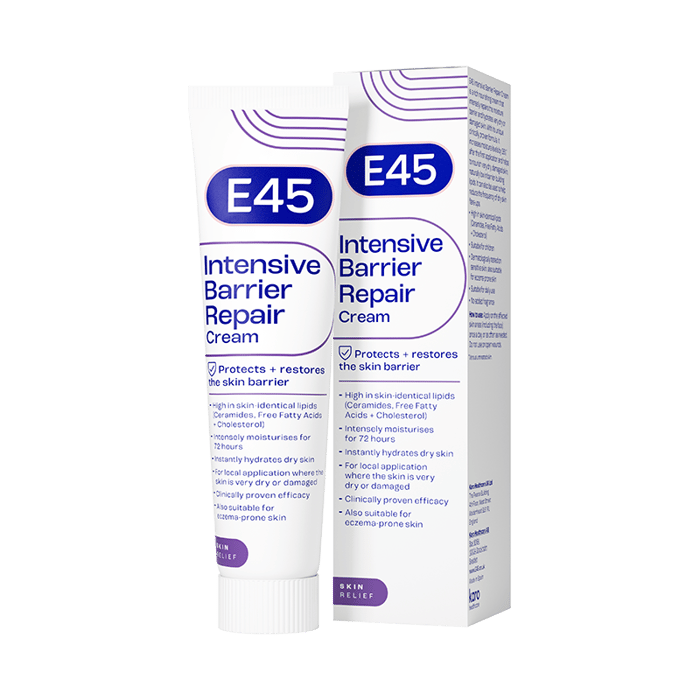
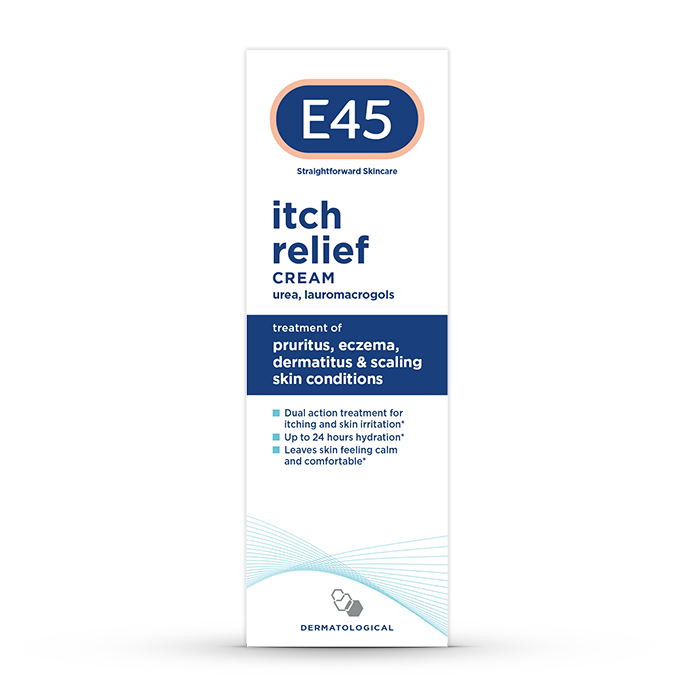
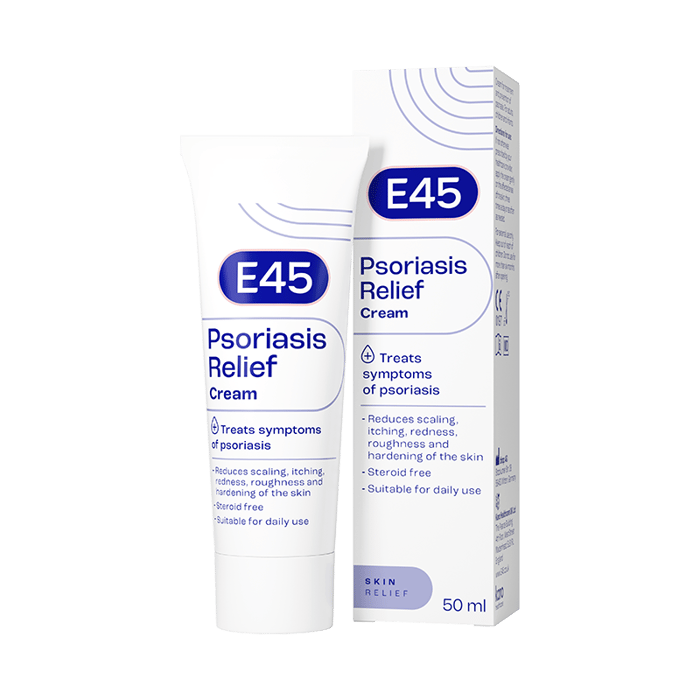
Guttate psoriasis treatment depends on how widespread it is. In mild cases, keeping the skin well moisturised may be all that’s needed while it clears up on its own (Source). A daily emollient, such as E45 Psoriasis Relief Cream, can help ease scaling, itching and redness, and moisturising well also helps active treatments absorb better. If you need more than that, your GP may suggest a steroid cream, a vitamin D treatment or a coal tar product. For widespread or persistent guttate psoriasis, a dermatologist may offer UV light therapy (phototherapy), which can be effective. If you have an active strep infection, your GP may prescribe antibiotics to treat it, but there’s no good evidence that antibiotics clear the guttate spots themselves (Source).
When should I see a doctor?
See a GP if you think you have guttate psoriasis, so they can confirm the diagnosis and check whether you have a strep infection that needs treating. It’s also worth going back to your GP if the spots spread quickly, don’t start to improve within a few months, or keep coming back, as guttate psoriasis can sometimes develop into longer-term plaque psoriasis (Source). Get medical advice promptly if you’re feeling very unwell, for example with a high temperature alongside a sore throat.
Guttate Psoriasis FAQs
What’s the difference between guttate psoriasis and plaque psoriasis?
Guttate psoriasis causes lots of small, drop-shaped spots with a thin scale that appear suddenly, often after a strep throat infection, and often clear up within a few months. Plaque psoriasis, the most common type, causes patches of red, flaky, crusty skin covered with silvery scales, usually on the elbows, knees, scalp and lower back (Source). Some people with guttate psoriasis go on to develop plaque psoriasis later.
Will guttate psoriasis come back?
For many people, it doesn’t: nearly two in three people have just one episode (Source). Others may have further flares, particularly after future strep throat infections, or find it develops into plaque psoriasis, so see your GP if new spots appear.
Can adults get guttate psoriasis?
Yes. It’s most common in children, teenagers and young adults, but it can develop at any age (Source). It can also appear in adults who already have long-term plaque psoriasis.
Do I need antibiotics for guttate psoriasis?
Not usually for the rash itself. If you have an active strep throat infection, your GP may prescribe antibiotics to treat it, but there’s no good scientific evidence that antibiotics help clear guttate psoriasis spots (Source).
Is guttate psoriasis the same as guttate eczema?
No. “Guttate” simply describes the small, drop-like shape of the spots. Guttate psoriasis is a type of psoriasis, while eczema is a different condition altogether. If you have small, round patches of eczema, this may be discoid eczema, which causes coin-shaped patches. A GP can tell you which you have.